


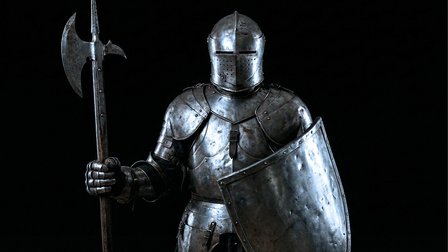
Photobiological safety
The scope of the international standards on photobiological safety covers all electrically operated, incoherent broadband radiation sources, i.e. conventional light sources, which also include LED chips.
The relevant wavelength range extends from 200 nm to 3,000 nm, i.e. from ultraviolet to infrared. Our LED chips emit in the visible spectrum and therefore fall within the scope of DIN 62471, which defines exposure limits for optical radiation in terms of potential health risks and specifies the corresponding measurement methods. In this context, two types of retinal hazard are assessed: photochemical and thermal retinal damage.
DIN 62471 classifies luminaires and light sources into four risk groups:
- Class 0: Exempt group – no risk
- Class 1: Risk Group 1 – low risk
- Class 2: Risk Group 2 – moderate risk
- Class 3: Risk Group 3 – high risk
Our LED chips fall into the exempt group or Risk Group 1 and, in practice, remain well below the defined exposure limits in many respects.
Protection ratings
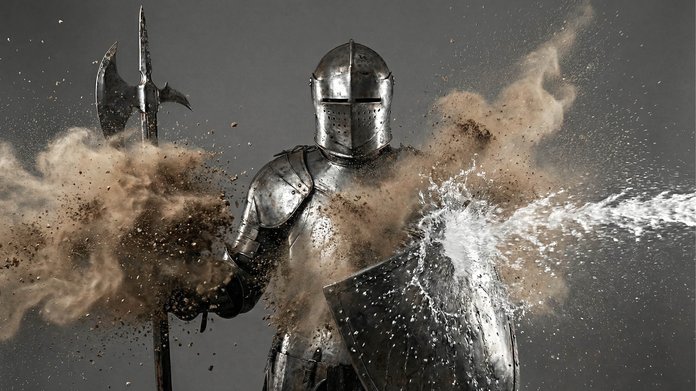
Our fixtures are protected against external influences such as dust, foreign objects, moisture, and water. Protection ratings are specified using IP codes, where IP stands for ingress protection. The protection levels are defined in the IEC 60529 standard and categorized into different classes.
For identifying a protection rating, the first digit refers to protection against the ingress of dust and solid foreign objects. The second digit indicates the level of protection against the ingress of water.
Protection rating coding
Protective circuitry
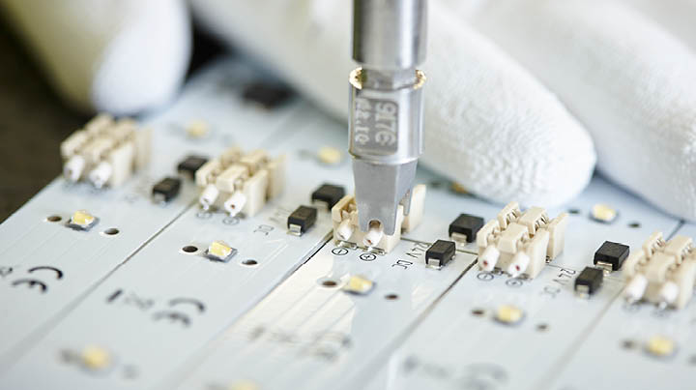
To safeguard against overvoltage and transient events, our fixtures are always equipped with protective circuitry integrated on the PCB. This additional circuit protects the luminaire from undesired failures caused by temporarily induced external signals and electrostatic transients.
In addition, every light source features reverse-polarity protection, which prevents damage to the fixture in case of briefly incorrect polarity (e.g., during installation or connection).
Protection classes
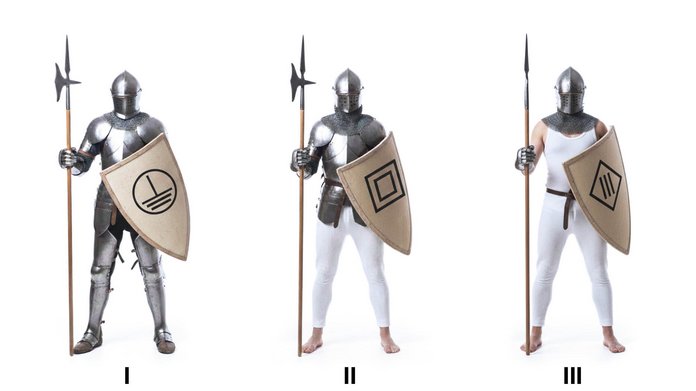
The designation of the protection class describes how hazards caused by electrical currents and voltages are reduced and prevented. The protection classes specify the safety measures implemented in the installation to prevent electric shock. Three approved protection classes are distinguished:
- Protection Class I applies to fixtures for which a protective earth connection is required.
- Protection Class II refers to enhanced insulation without a dedicated protective earth connection.
- Protection Class III is assigned to fixtures operated with safety extra-low voltage.
Photobiological risk groups under EN 62471
The standard EN 62471 assesses the photobiological hazard potential of lamps to the eyes and skin. It classifies luminaires into four risk groups (RG), measured by the exposure time required to reach hazard limit values for UV, blue light, retinal and infrared effects.
- RG 0 — Exempt Risk Group: No photobiological hazard under normal use. Typical for indoor luminaires with standard optics.
- RG 1 — Low Risk: Hazard only after prolonged, intentional exposure. Protection is provided by the natural aversion response (blink reflex).
- RG 2 — Moderate Risk: Hazard on direct gaze. Requires warning labels; not intended for general lighting in areas where the light source can be looked at.
- RG 3 — High Risk: Hazard already at short-term exposure. Permitted only for specialised applications (UV curing, special irradiation).
LED industrial luminaires from established manufacturers typically reach RG 0 or RG 1. The RG classification must be stated on the luminaire datasheet. For workstations with extended line of sight to the light source, RG 0 should be preferred.